In the history of Equatorial Guinea, marked by two successive dictatorships – that of Francisco Macías and that of Teodoro Obiang – few voices dared to stand up for justice and protect human lives.
Among them stands out Raimundo Ela Nve, patriarch of the Efac clan, an agronomist trained alongside the Spanish, a deputy, and governor of the island of Bioko.
A man of justice rooted in the Fang tradition and a recognized expert in agriculture, he refused to give in to the logic of repression. As governor of Bioko, he chose to save lives and protect persecuted minorities, particularly the Bubi people, at a time when Equatorial Guinea was sinking into terror.
Opposed from the outset to the rise of Teodoro Obiang, he was persecuted and survived several assassination attempts. Removed from office in 1989, he continued his commitment by teaching at the National School of Agriculture and serving as a wise elder, a defender of justice, and a patriarch until his death.
His legacy has been acknowledged in the book Dictatorland by British writer and journalist Paul Kenyon, which highlights his unique role as a defender of lives during one of Africa’s bloodiest dictatorships.
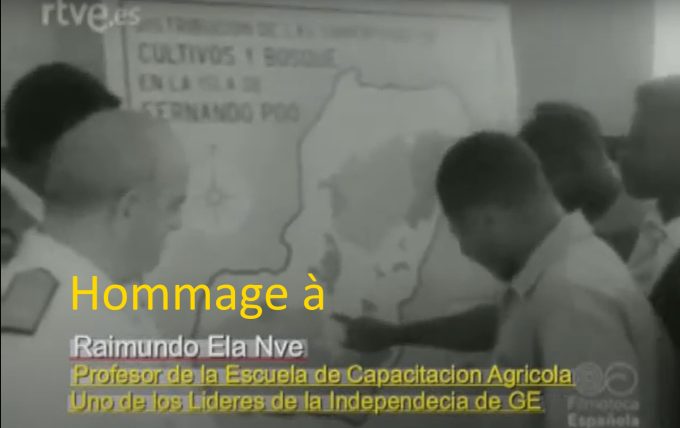
A rare excerpt from a Spanish television report of the colonial era also recalls his path: it shows Raimundo Ela Nve presenting, as an engineer and educator, the state of agricultural exploitation on the island of Bioko to the authorities in Madrid during an official tour of the colony. This image illustrates the rigor, competence, and vision of a man devoted to serving his people.
Today, his legacy inspires a new generation. His son, Raimundo Ela Nsang, founder of the MILIGE movement, carries this struggle forward within a Pan-African vision of justice, dignity, and democratic transition.
To honor this memory and extend this legacy, MILIGE will soon launch initiatives and public actions to more widely share his life’s work and values, so that his example continues to inspire Equatorial Guinea and all of Africa.